
The Covenanters
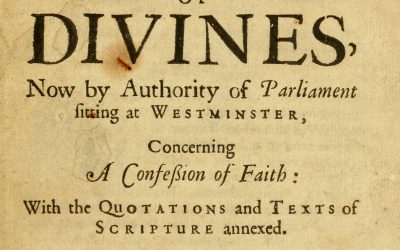
The Westminster Confession (1647)
Out of the gathering of the leading theologians in England, with some key Scottish scholars, came the famous Westminster Confession of 1647. This document enshrined so much of what biblical Christians hold dear, and it was a watershed moment in our Protestant church...
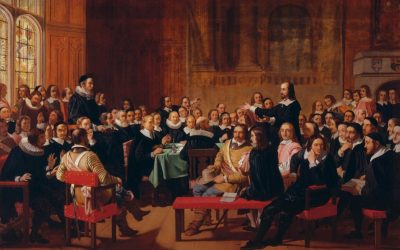
The Westminster Assembly (1643-1653)
The Reformation was a messy business. As people broke away from Rome they began to look afresh at the Bible, with various factions emerging over differing opinions of interpretation. However, it was a great opportunity to look at church beliefs and practice and line...
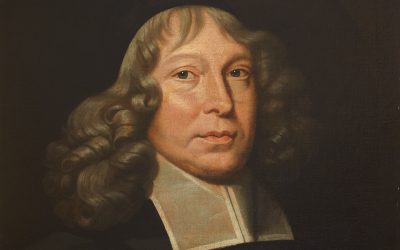
Lex Rex, Samuel Rutherford’s Revolutionary Book
When the soldiers came for Revd Samuel Rutherford to arrest him for treason, which would have led to his execution, they found him weak and dying of natural causes, so he was left. It was 1661 and King Charles II was determined to remove all opposition to his desire...
The Solemn League and Covenant of 1643 (Part 2)
When John Pym, the leading parliamentarian in Westminster, asked Alexander Henderson, the minister of St Giles’ in Edinburgh, to put together a second document, the Solemn League and Covenant emerged. Along with Magna Carta (1215), Petition of Right (1628), and the...
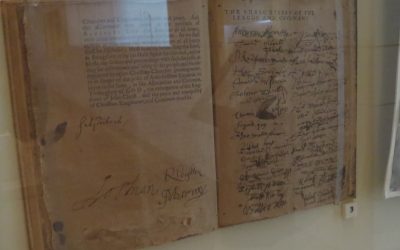
The Solemn League and Covenant (Part 1)
The situation in England was very tense. King Charles I was seeking increasingly to exercise his control over both parliament and the church. He dissolved parliament in 1627 and in the following year assembled a new one. However, with the new members came John...
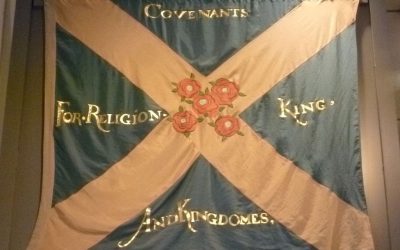
The Bishops’ Wars (1639-1640)
When the Assembly met in Glasgow Cathedral in November 1638, the men there represented the flower of the Scottish nation. Apart from 140 church ministers, there were 17 nobles, 9 knights, 25 barons and 47 burgesses. As such, they also represented the voice of the...
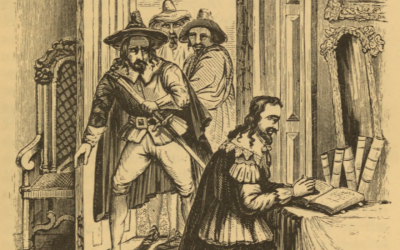
The National Covenant: Archibald Johnston, Lord Warriston
Archibald Johnston wept. In his bedroom on the Royal Mile of Edinburgh, yards from Mercat Cross, he sat and wrote in his diary on Sunday, 23 April 1637: ‘In the twinkling of an eye, before I knew, behold the catalogue of all my sins done either before or since my...
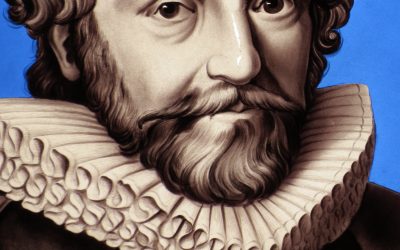
The National Covenant, Part 3: Alexander Henderson (c.1583-1646)
Revd. Alexander Henderson huddled in the darkest corner of the church, hoping not to be recognized. The reputation of the preacher, Robert Bruce of Kinnaird, had stirred him so much, that he took the risk of being discovered. As he waited to hear the message, he...
The National Covenant of 1638 (Part 2)
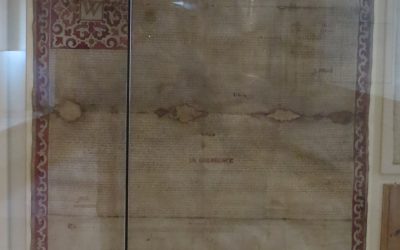
Last week we briefly looked at the reason for the National Covenant of Scotland. This week we will examine the actual document a bit more closely. A council of leaders gathered together and agreed that a peaceful, legal, National Covenant should be put together,...
The National Covenant of 1638 (Part 1)
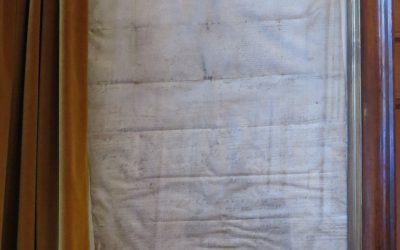
At an early hour it seemed that the whole city of Edinburgh was astir and moving en masse. They came in small groups and crowds, converging on Greyfriars’ Kirk. Some were chatting excitedly, but others were deep in their own thoughts. Over the next few days, it was...
The King Starts to Control the Church
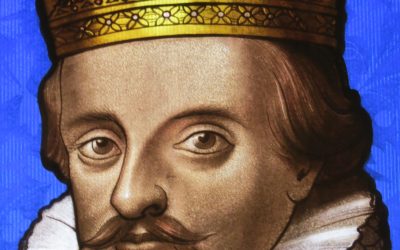
In 1605, just two years after the Union of Crowns, it became clear that King James was starting to interfere in the Church of Scotland. A General Assembly in Aberdeen had been appointed by him in July, but he sent out a circular notice cancelling it indefinitely....
The King James Bible, 1611
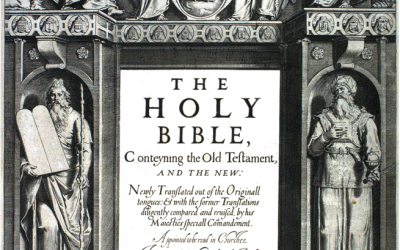
When the King James Bible of 1611 came off the printing press and was distributed, it would go on to transform countless lives, and reform governments and nations. Indeed, it became the most famous Bible translation in history, the words of which were used by William...